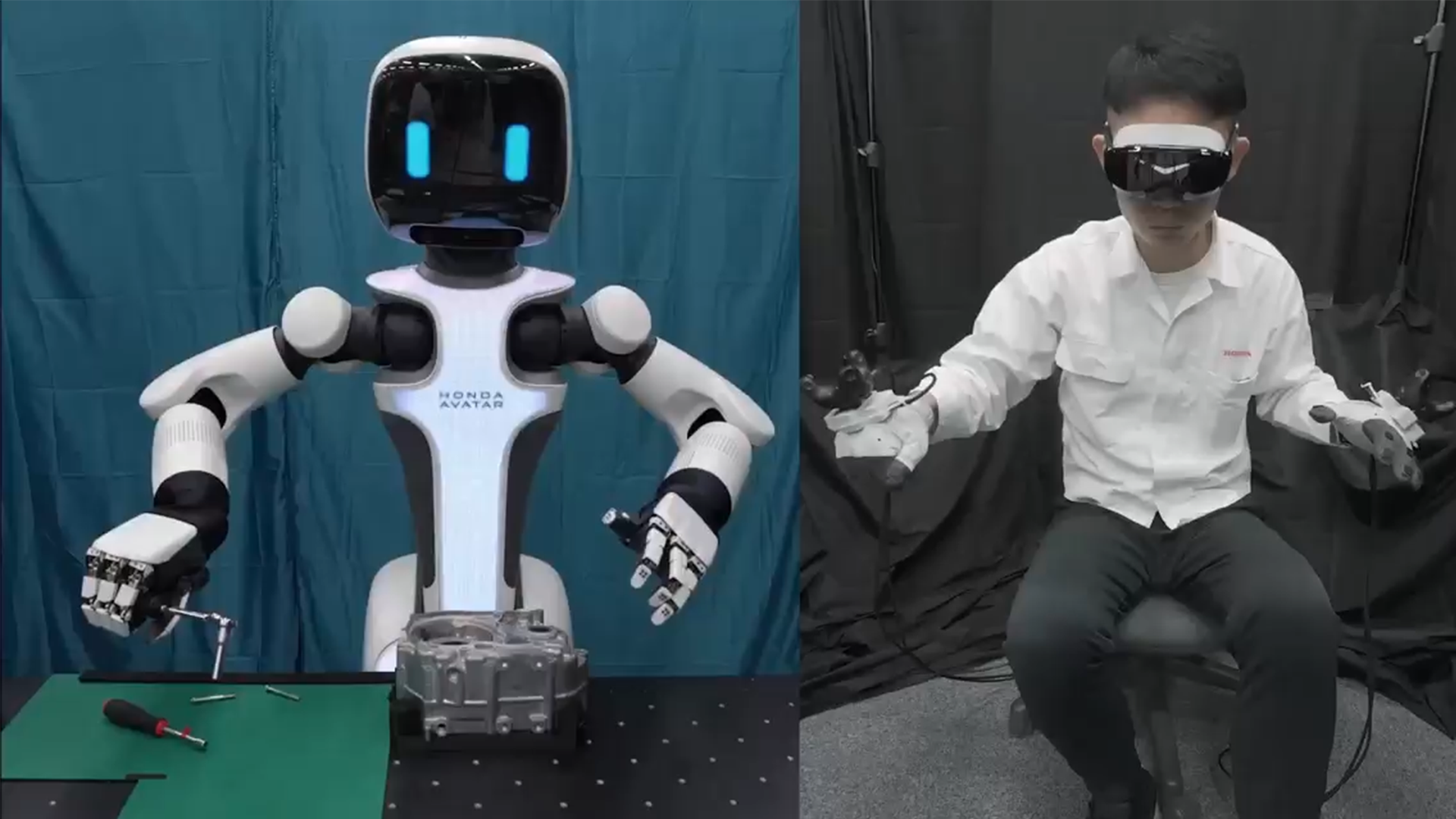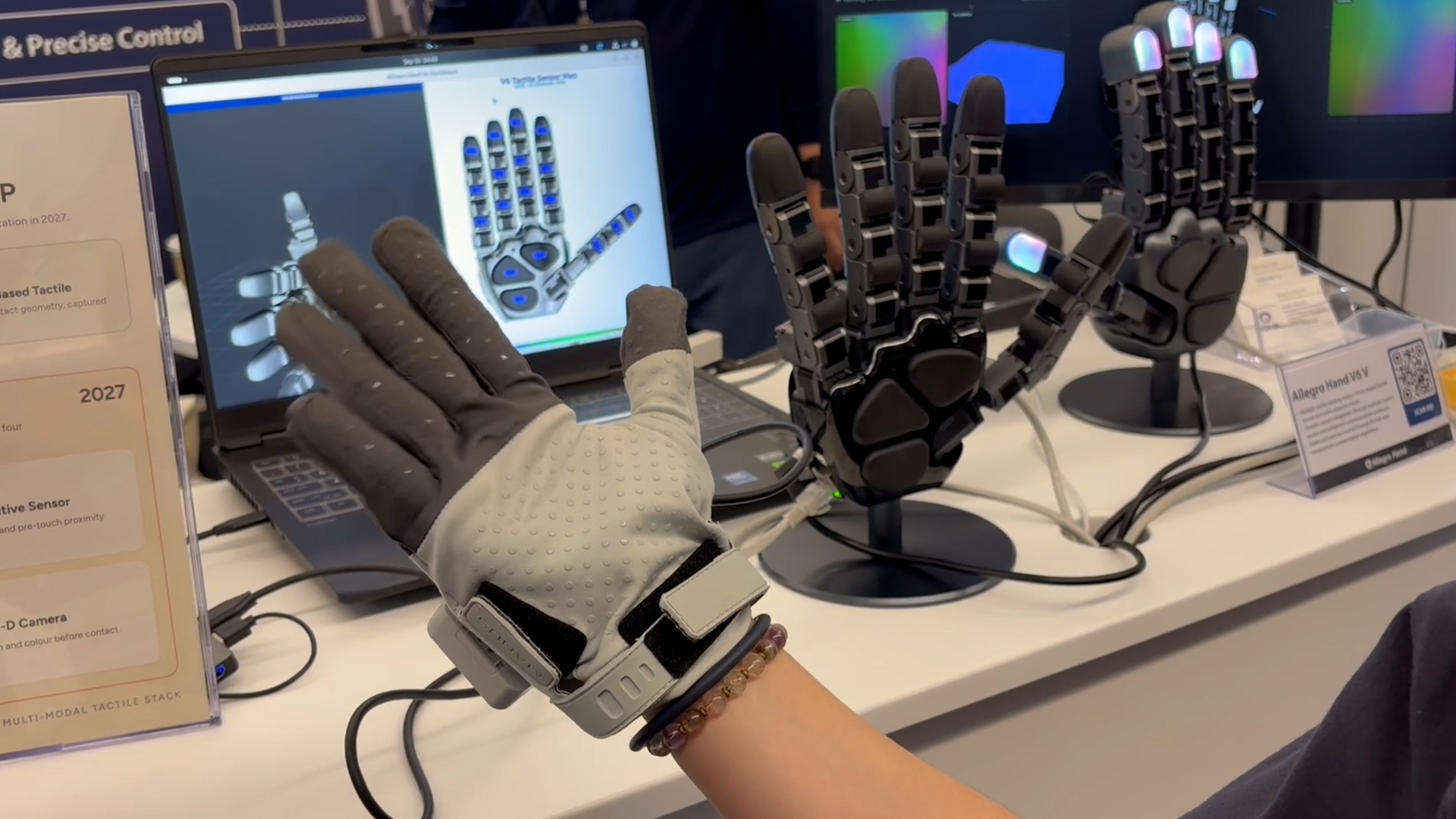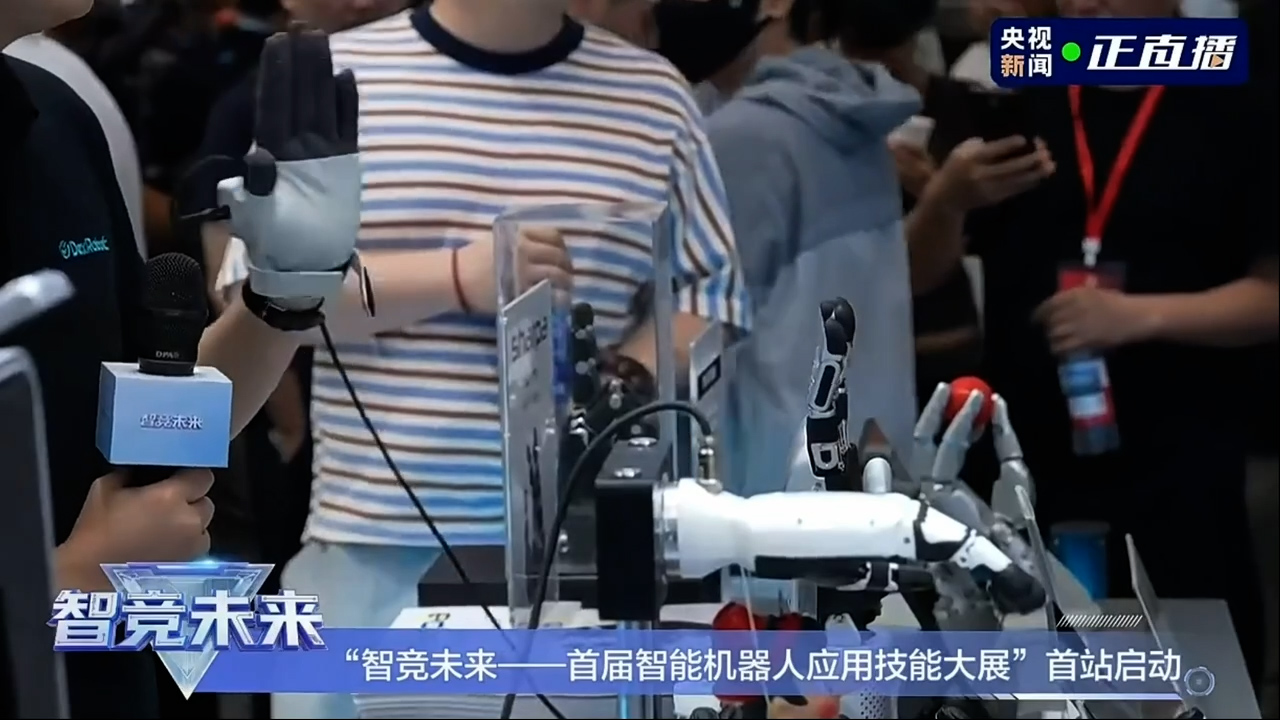

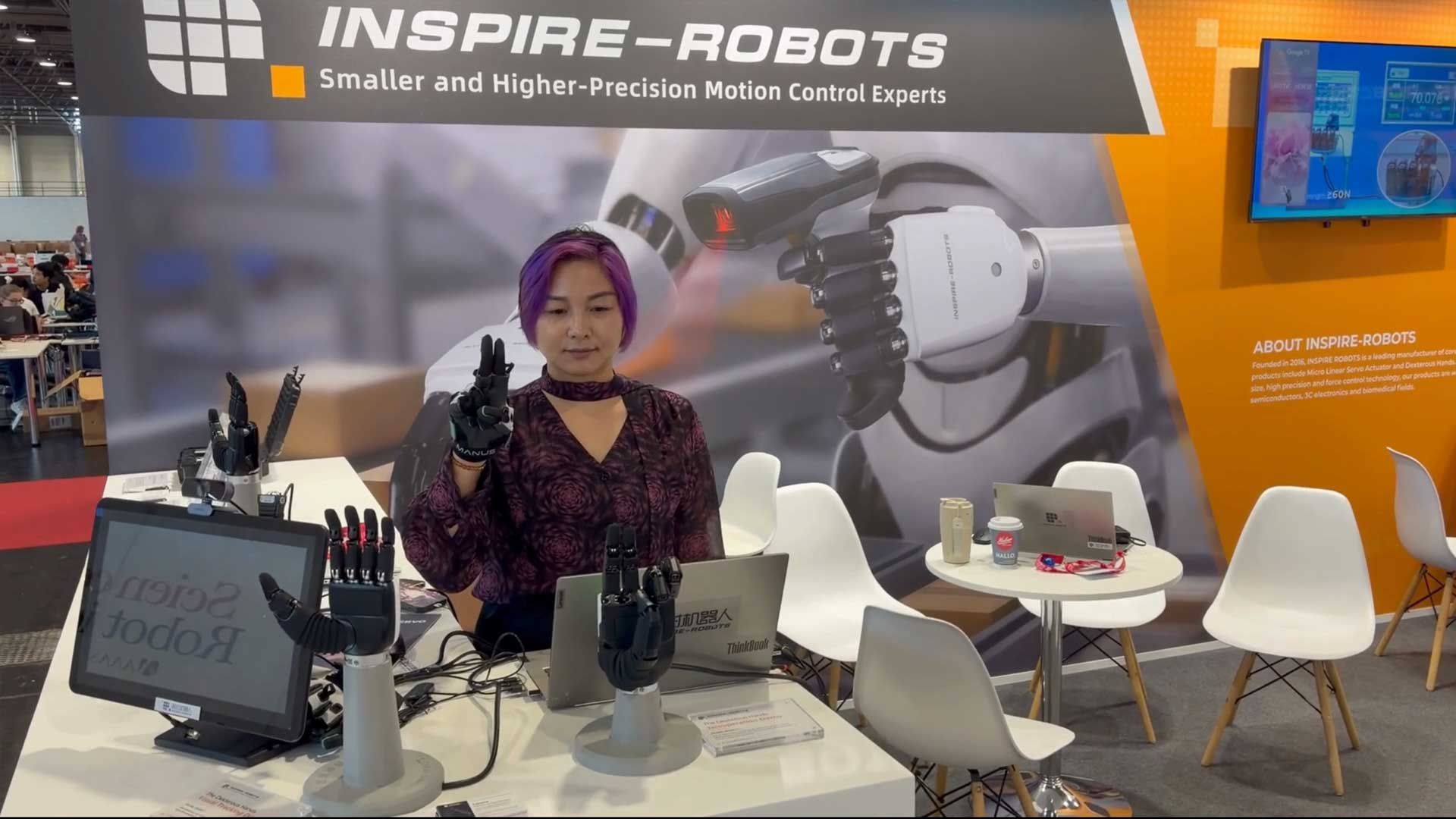
The Inspire Hand E2, also known by its model number RH56E2,is a humanoid hand designed for straightforward integration into existing control stacks. The hand provides six degrees of freedom across twelve joints, together with tactile sensing. This combination makes it relatively straightforward to integrate into an existing humanoid control stack, but it also requires the human interface to translate high-dimensional human hand movements into commands that a simpler robotic hand can execute.
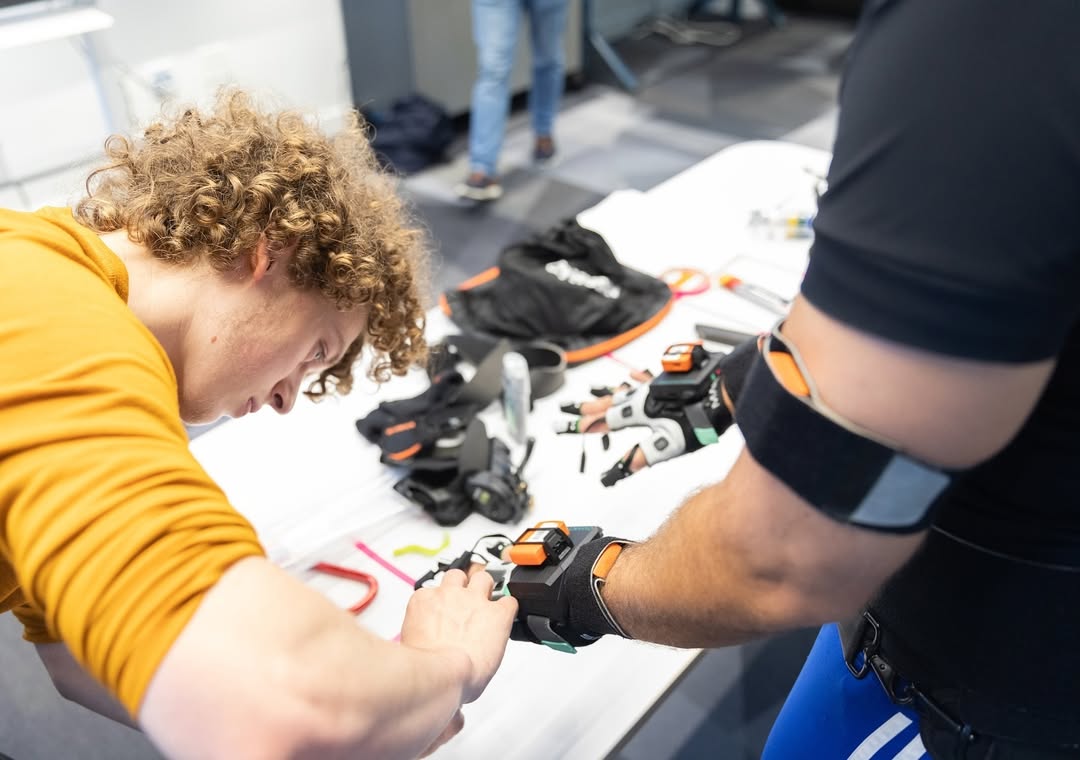
This is where MANUS gloves fit into the pipeline. MANUS gloves track finger articulation and fingertip position, and MANUS Core processes this into a full hand-skeleton data stream, providing a teleoperation system with the information needed to interpret the operator's intended movement before converting it into robot commands.
Because the RH56E2 has fewer controllable degrees of freedom than the 25 degrees of freedom anatomical hand model MANUS Core reconstructs, one-to-one joint mapping is neither possible nor necessary. For fingers with coupled motion or different mechanical structures, fingertip position data can be used as the endpoint target. A grasp-retargeting layer then converts these targets into an achievable RH56E2 configuration.
This approach focuses on preserving fingertip placement, hand opening, and overall grasp shape, which are often more important to task success than reproducing every individual human joint angle.
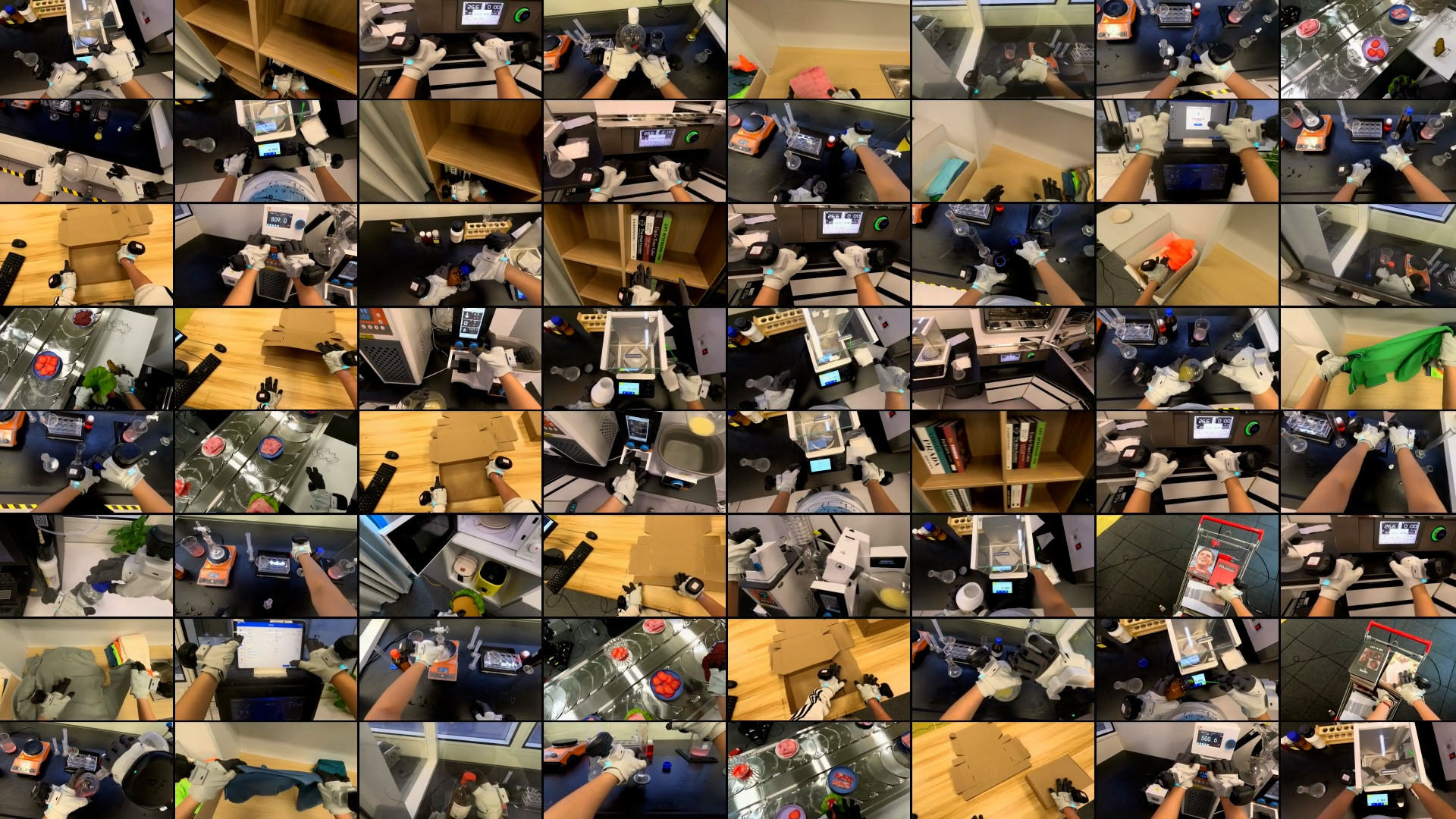
Once the retargeting layer is established, the same commands used for live teleoperation can also be recorded as training data. A demonstration episode may include MANUS hand-tracking data, RH56E2 joint states, tactile readings, camera views, and task-outcome labels. Together, these data modalities can support behavior cloning, grasp classification, and cross-embodiment retargeting research.
The Inspire Hand E2's tactile sensors can detect contact during grasping. When integrated with MANUS Metagloves Pro Haptic, the measured tactile intensity can be mapped to haptic feedback on the operator's corresponding fingers.
This creates a practical architecture for teleoperating the Inspire Hand E2 while simultaneously collecting structured manipulation data for humanoid robotics research.