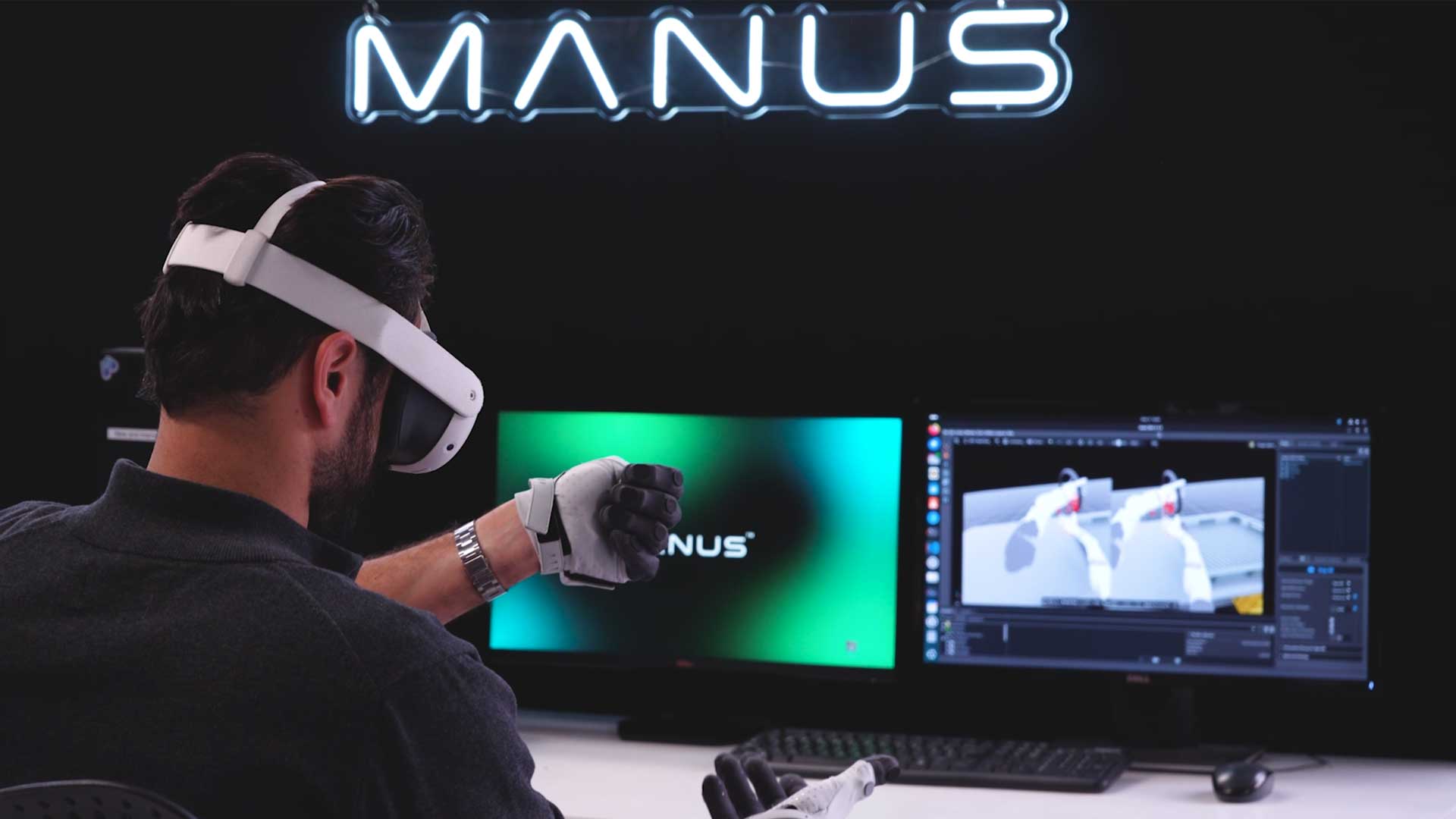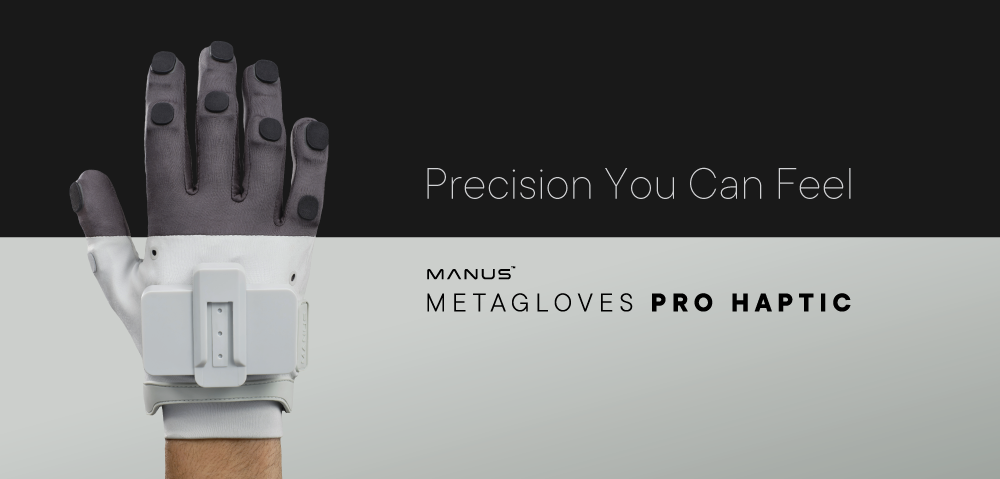
The new gloves extend the Metagloves Pro platform by combining millimeter-accurate hand tracking with integrated haptic feedback, enabling operators to capture movement while physically experiencing interaction in real time.
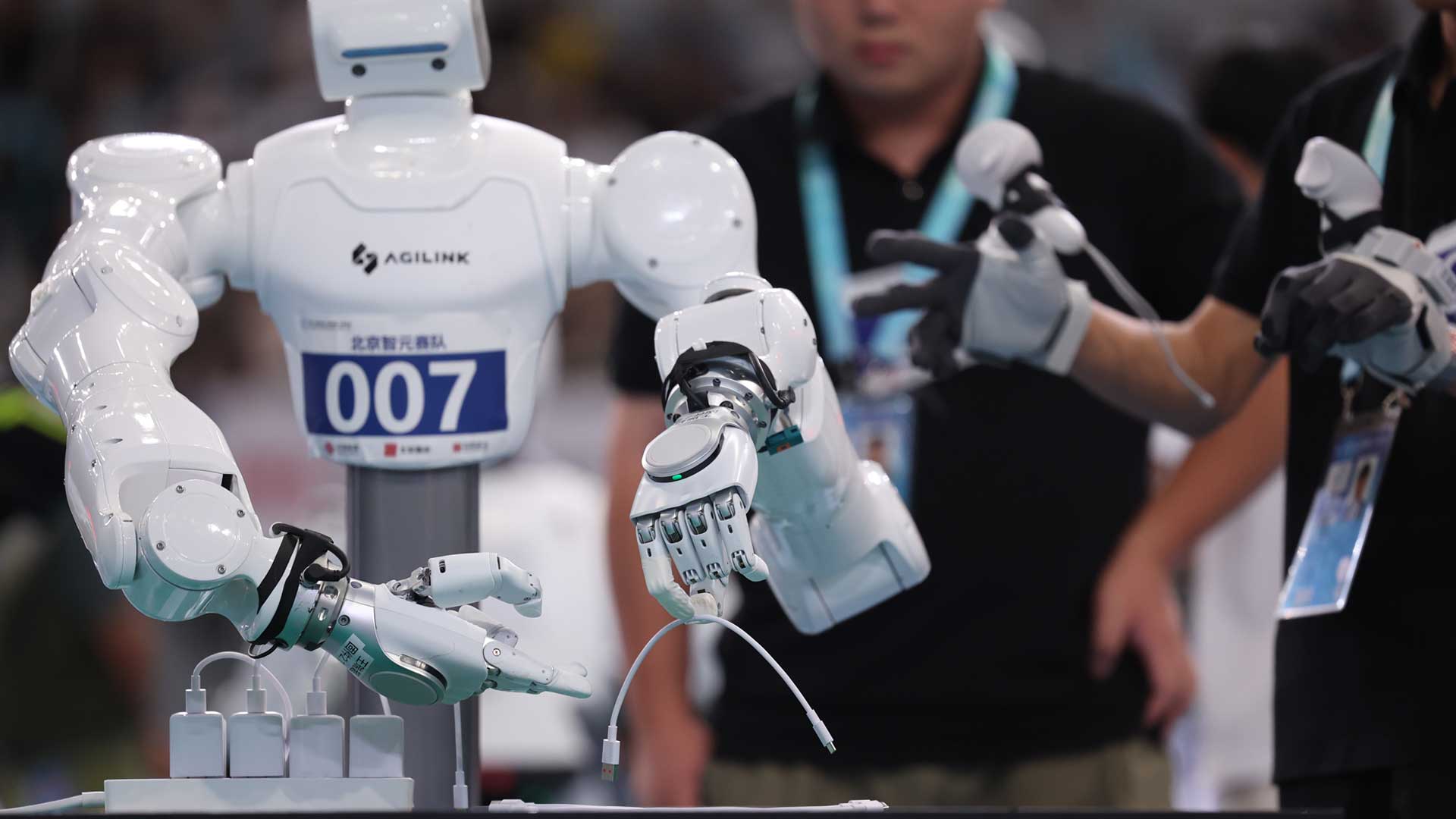
Modern robotics and embodied AI systems increasingly require high-fidelity human interaction data for training and teleoperation. Metagloves Pro Haptic addresses this need by pairing precise motion capture with tactile feedback, supporting more intuitive control, faster learning, and improved spatial understanding in robotics and XR-based training environments.
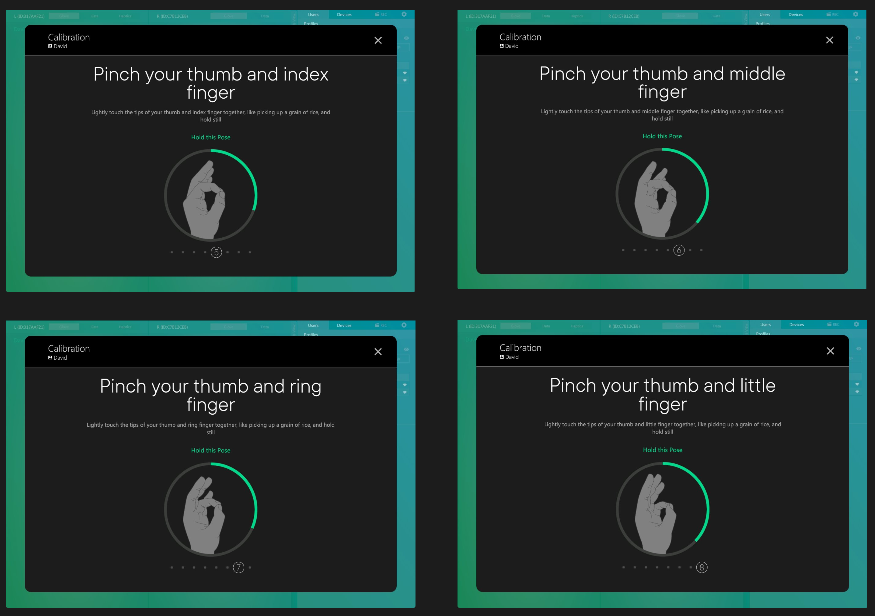
Metagloves Pro Haptic are powered by MANUS’ proprietary Electro Magnetic Field (EMF) tracking technology, delivering millimeter-level accuracy without occlusion or drift and requiring minimal calibration, and providing real-time vibrotactile feedback to signal object interaction. Every gesture and micro-movement is captured exactly as it occurs, generating high-fidelity datasets suitable for robotics training, motion science, and AI research.
Integrated vibrotactile feedback enabled by Linear Resonant Actuators adds a physical layer to digital interaction. By providing tactile cues during operation, the gloves help guide motion, improve awareness of contact, and accelerate skill acquisition. This makes Metagloves Pro Haptic particularly well suited for robotics teleoperation, XR training simulations, and embodied AI development, where physical understanding of interaction plays a central role.
Metagloves Pro Haptic integrate into industry standard workflows through MANUS Core software, which provides flexible integration options optimized for robotics, research, and XR applications.
“As robotics moves toward more complex, contact-rich manipulation, the quality of human interaction data becomes critical,” said Stephan van den Brink, Co-founder and CEO at MANUS. “Metagloves Pro Haptic gives researchers and operators the precision they need for motion capture while adding the tactile dimension that makes teleoperation more intuitive and training data more complete.”