Sarcomere Dynamics is a Canadian robotics company focused on advancing high-dexterity robotic systems for both automation and prosthetics. Their work centers on replicating human hand capability to enable more flexible, real-world interaction across industries.
With the ARTUS Lite, the team introduces a 20 DoF robotic hand designed for general-purpose automation, from industrial assembly to remote handling in hazardous environments.
Many robotic systems still rely on simple grippers that limit what automation can achieve. Tasks that require finger-level control, adaptive grip, or interaction with irregular objects remain difficult to automate reliably.
At the same time, translating human dexterity into robotic systems requires precise input. Without accurate hand tracking, it becomes difficult to test, validate, and eventually train these systems for real-world use.
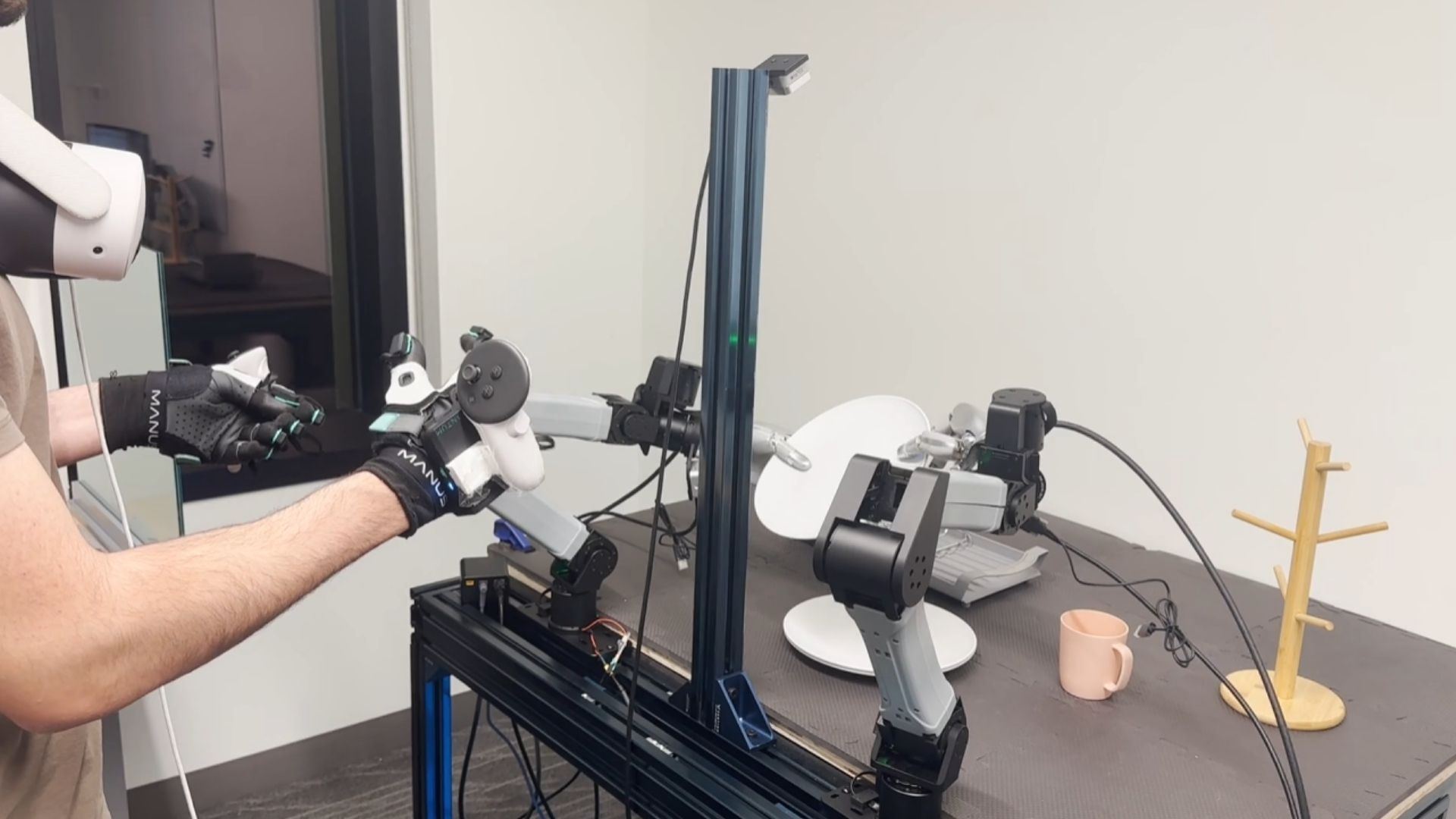
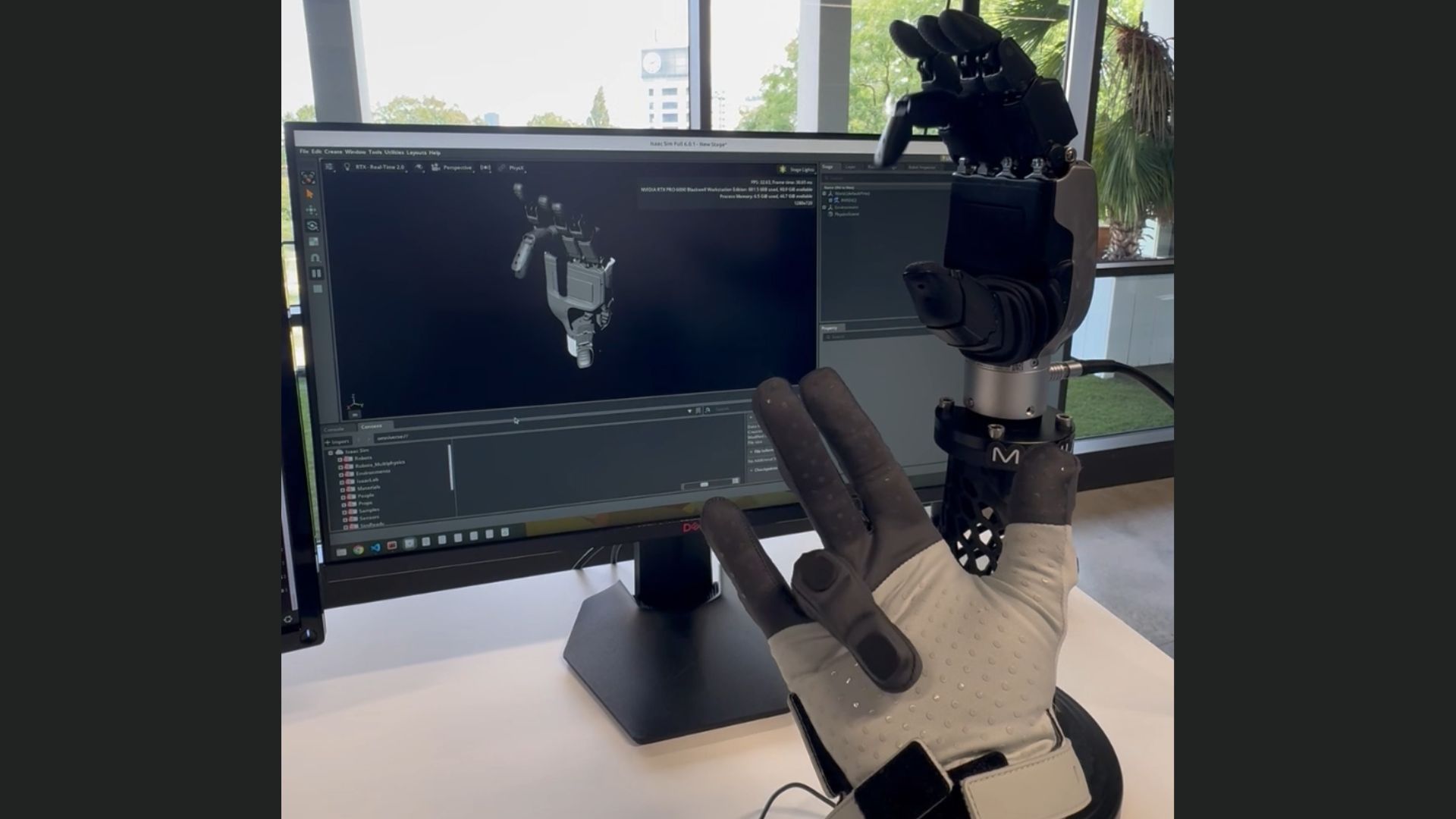
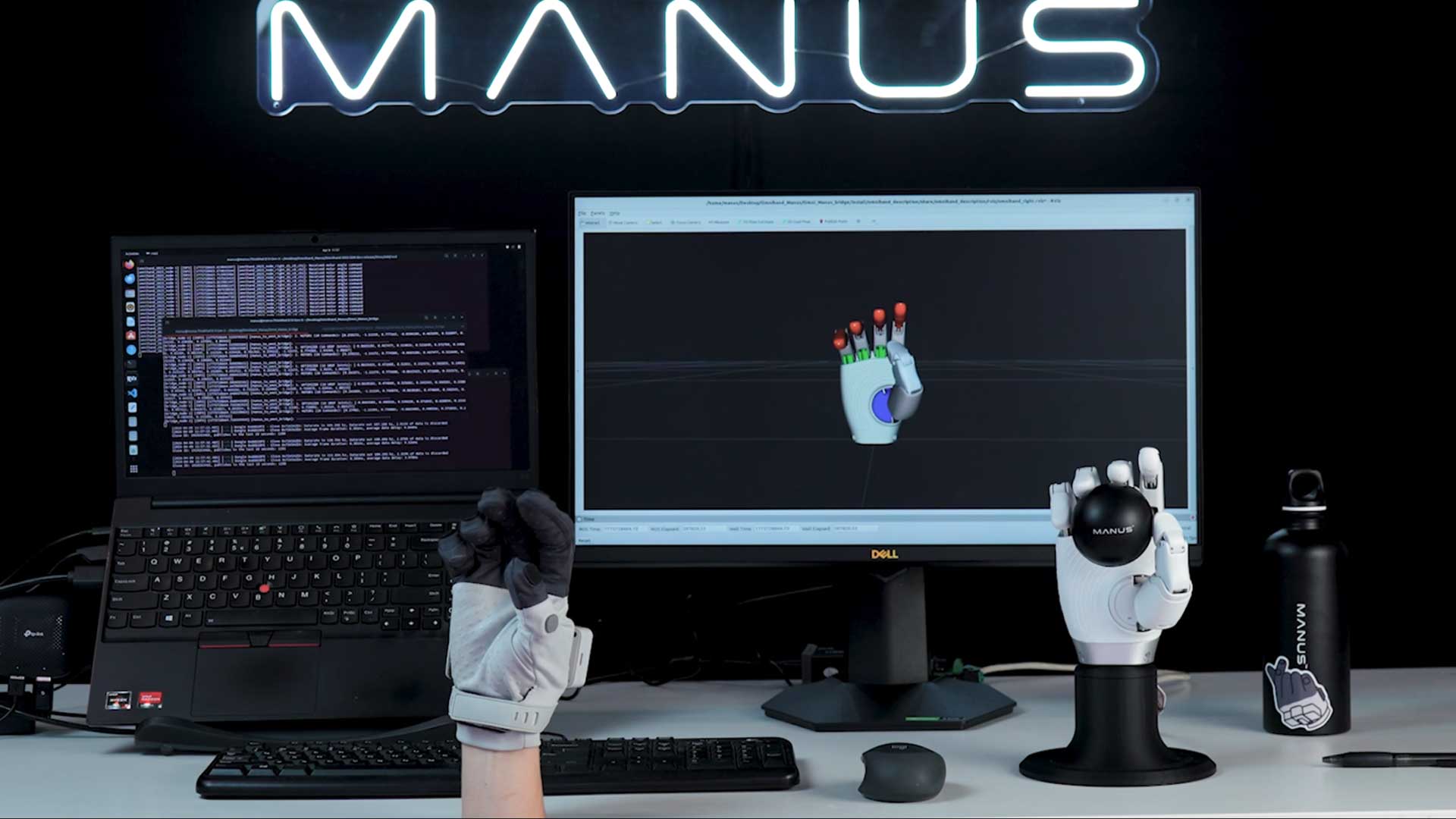
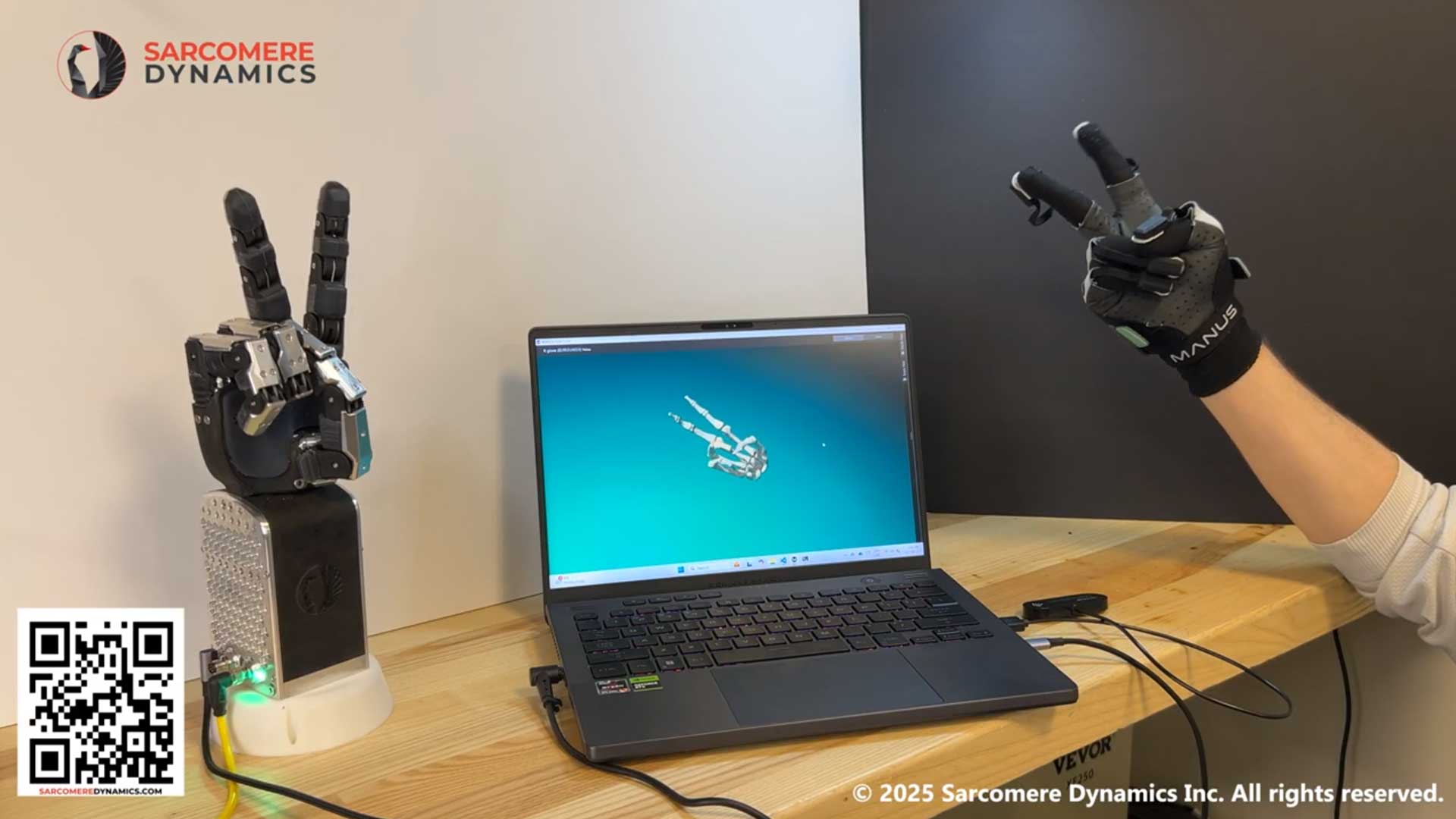
In this demonstration, Sarcomere Dynamics uses MANUS gloves to control the ARTUS Lite robotic hand.
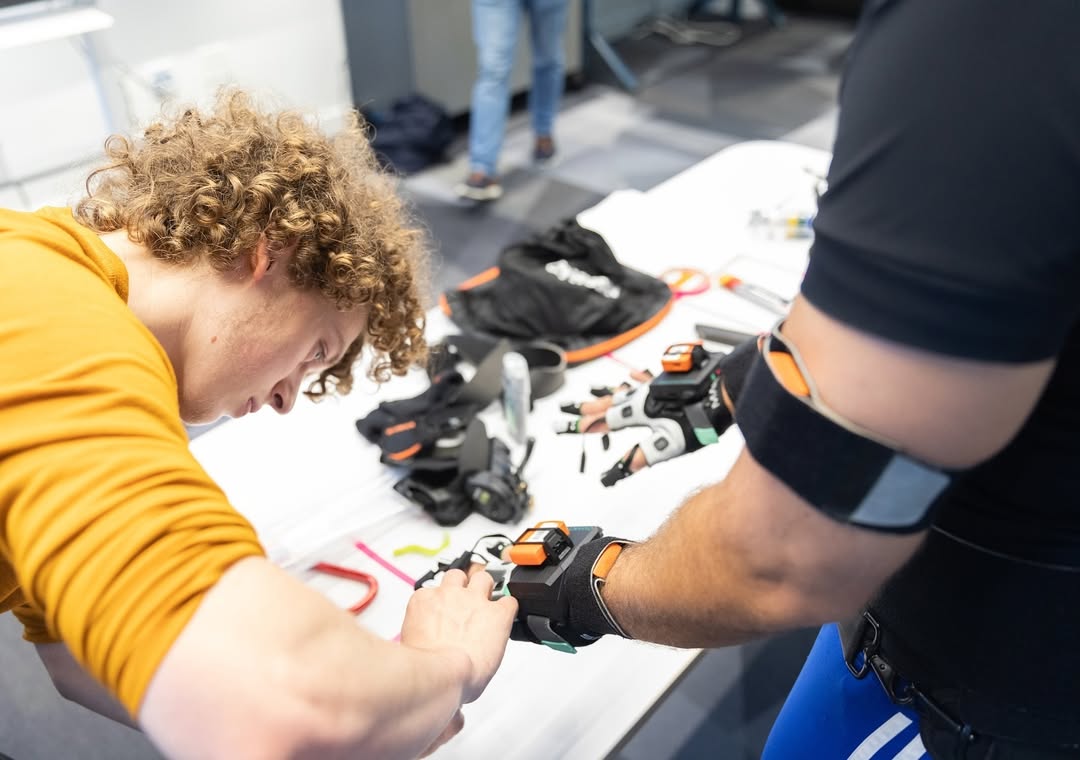
MANUS gloves capture full hand articulation, allowing operators to directly pilot the robotic hand in real time. This creates a natural mapping between human finger movement and the hand’s 20 DoF structure.
The result is intuitive control at the individual finger level, enabling detailed manipulation and precise interaction with objects.
The ARTUS Lite demonstration highlights fine, controlled movement across each finger.
Operators are able to:
This level of control reflects the system’s focus on dexterity, supported by internal sensing of joint position and force, as well as a design built to handle both precision tasks and higher-force interaction.
ARTUS Lite is built for deployment beyond the lab. Its lightweight and rugged construction supports use in:
With compatibility across robotic arms and plug-and-play integration, it is designed to fit into existing systems without requiring a full redesign.
By combining the ARTUS Lite with MANUS gloves, Sarcomere Dynamics demonstrates how human hand motion can directly drive robotic systems with high fidelity.
This approach supports both real-time teleoperation and future data collection for learning-based systems, where precise human demonstrations are critical.
MANUS provides the tracking accuracy needed to translate human intent into robotic action, helping bridge the gap between human dexterity and scalable automation.