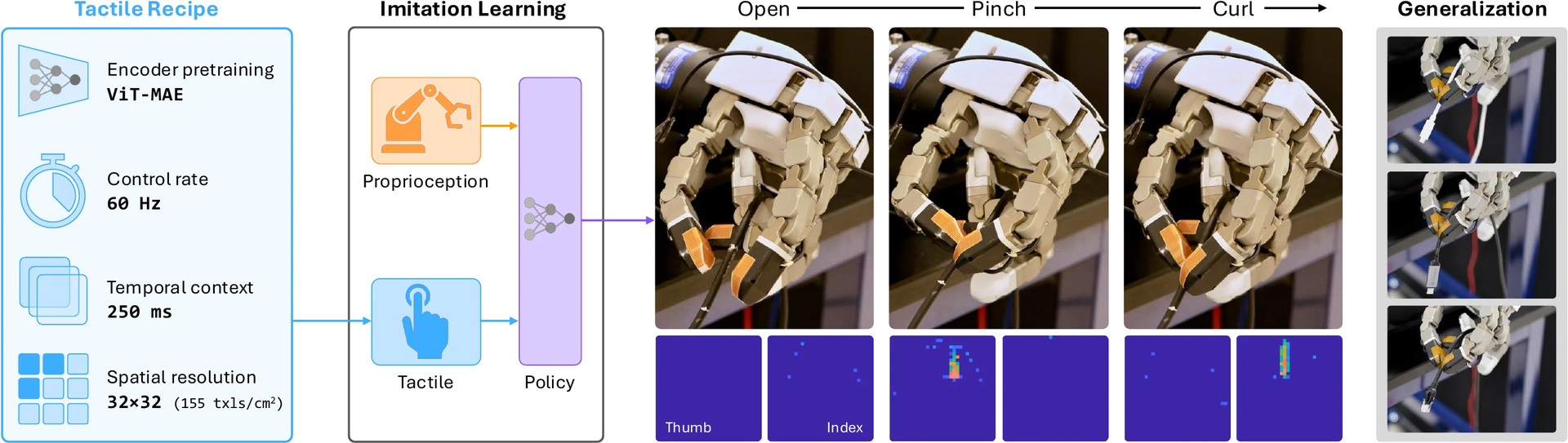
Analog Devices Touch2Trace research addresses a core challenge in dexterous robotics: helping a robot handle a flexible cable without relying on vision. The robot must maintain its grip as the cable moves, translate human finger movements into robot actions, and learn from demonstrations. Touch2Trace combines MANUS-based teleoperation, tactile sensing, and imitation learning so the robot can trace cables under new routing conditions.
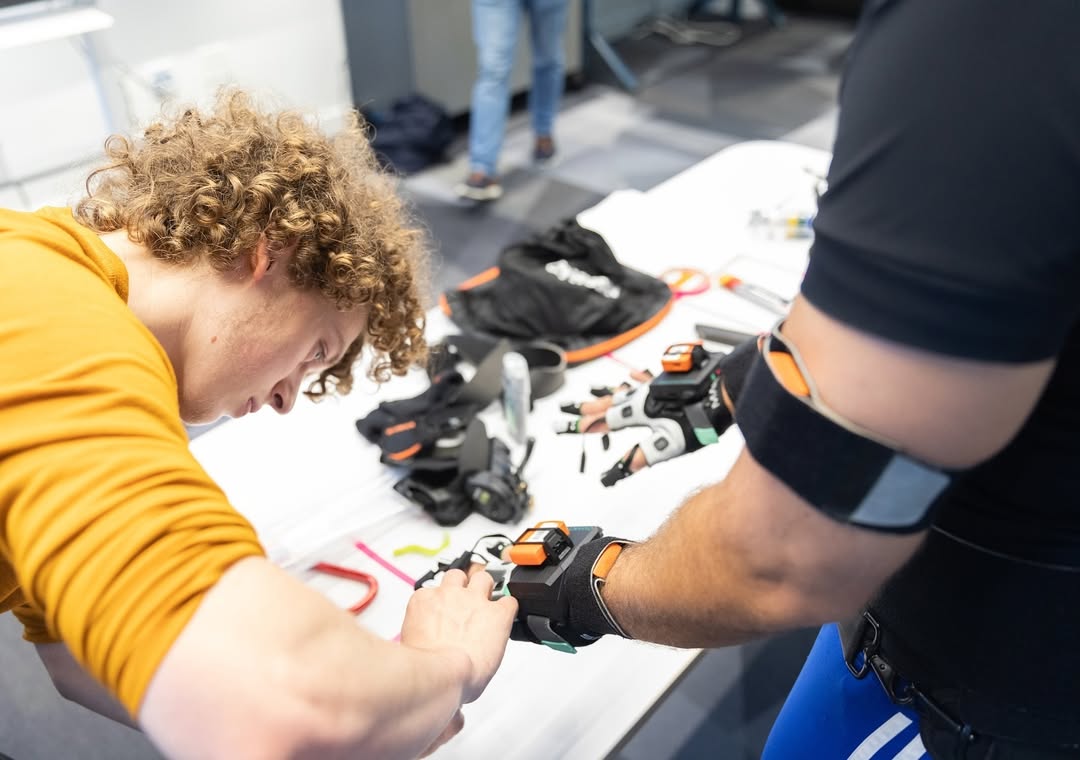
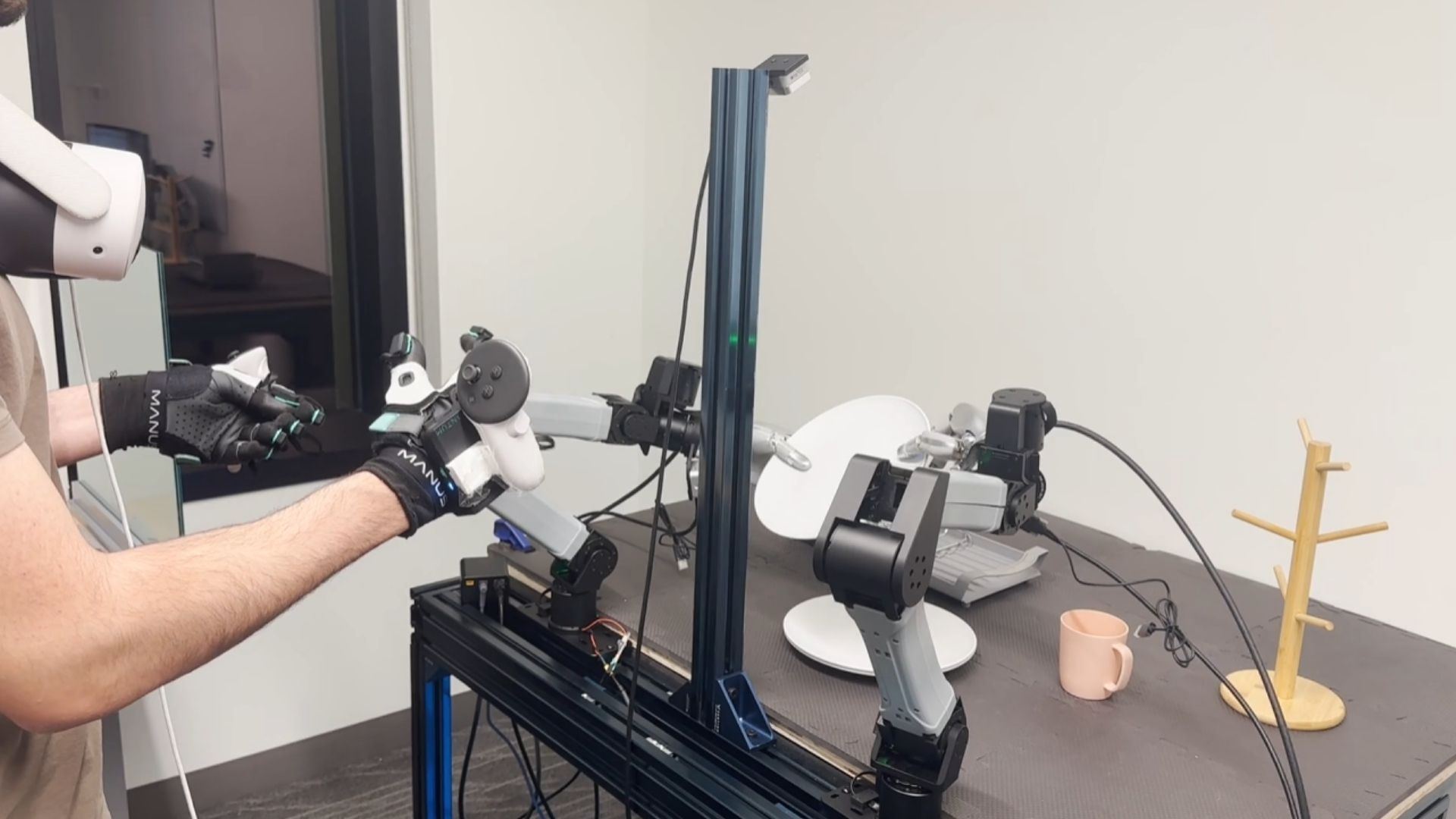
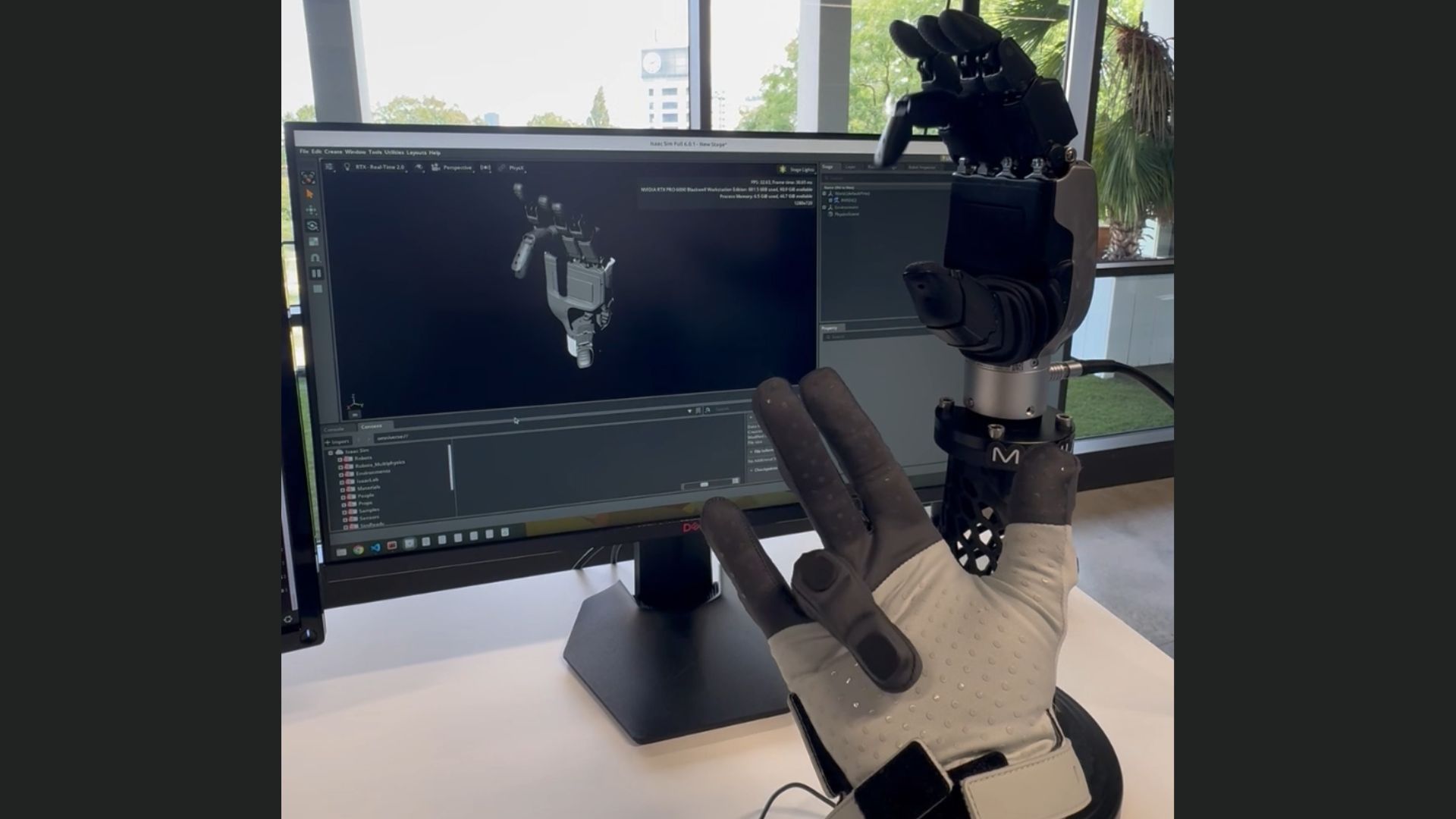
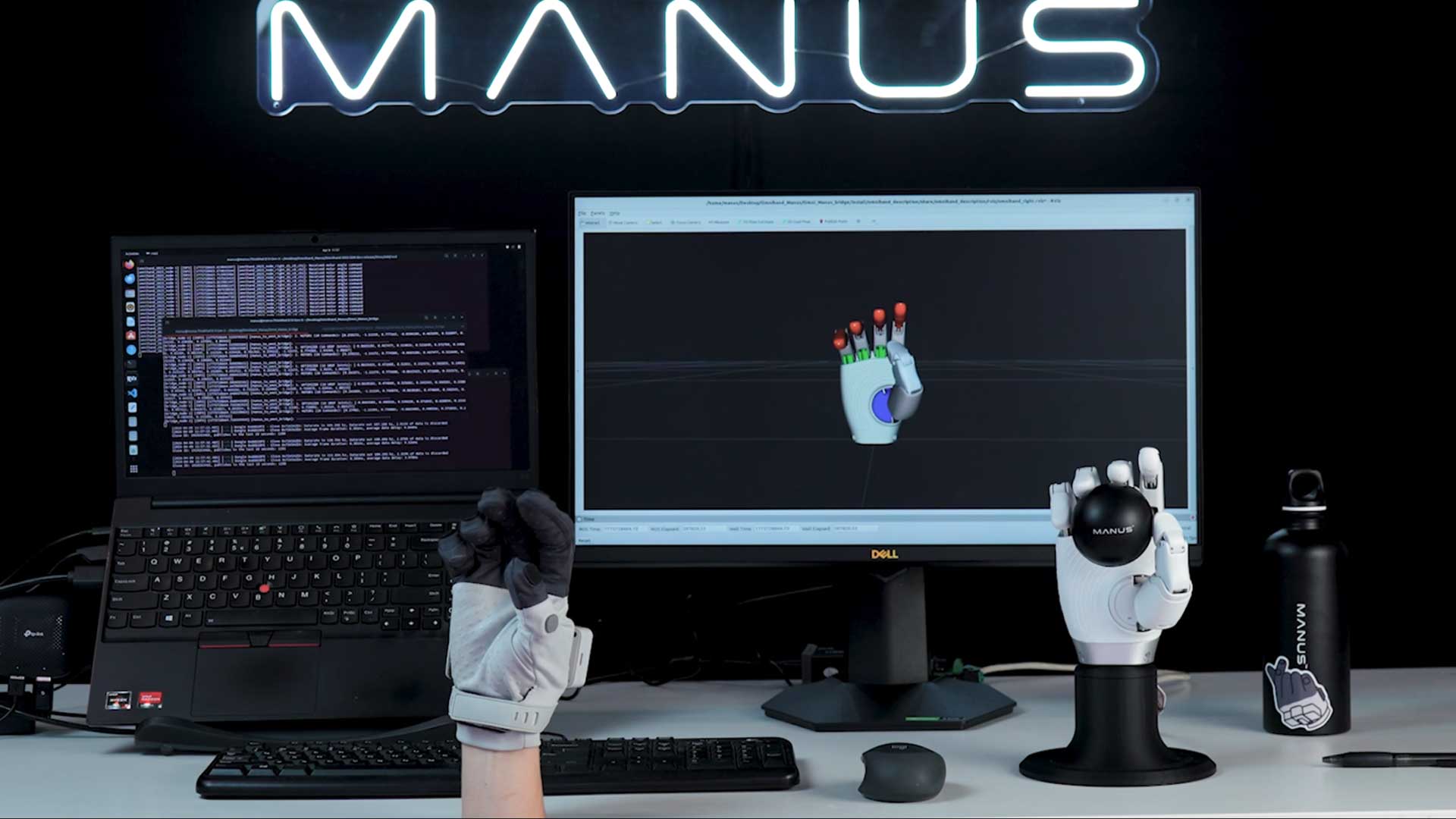
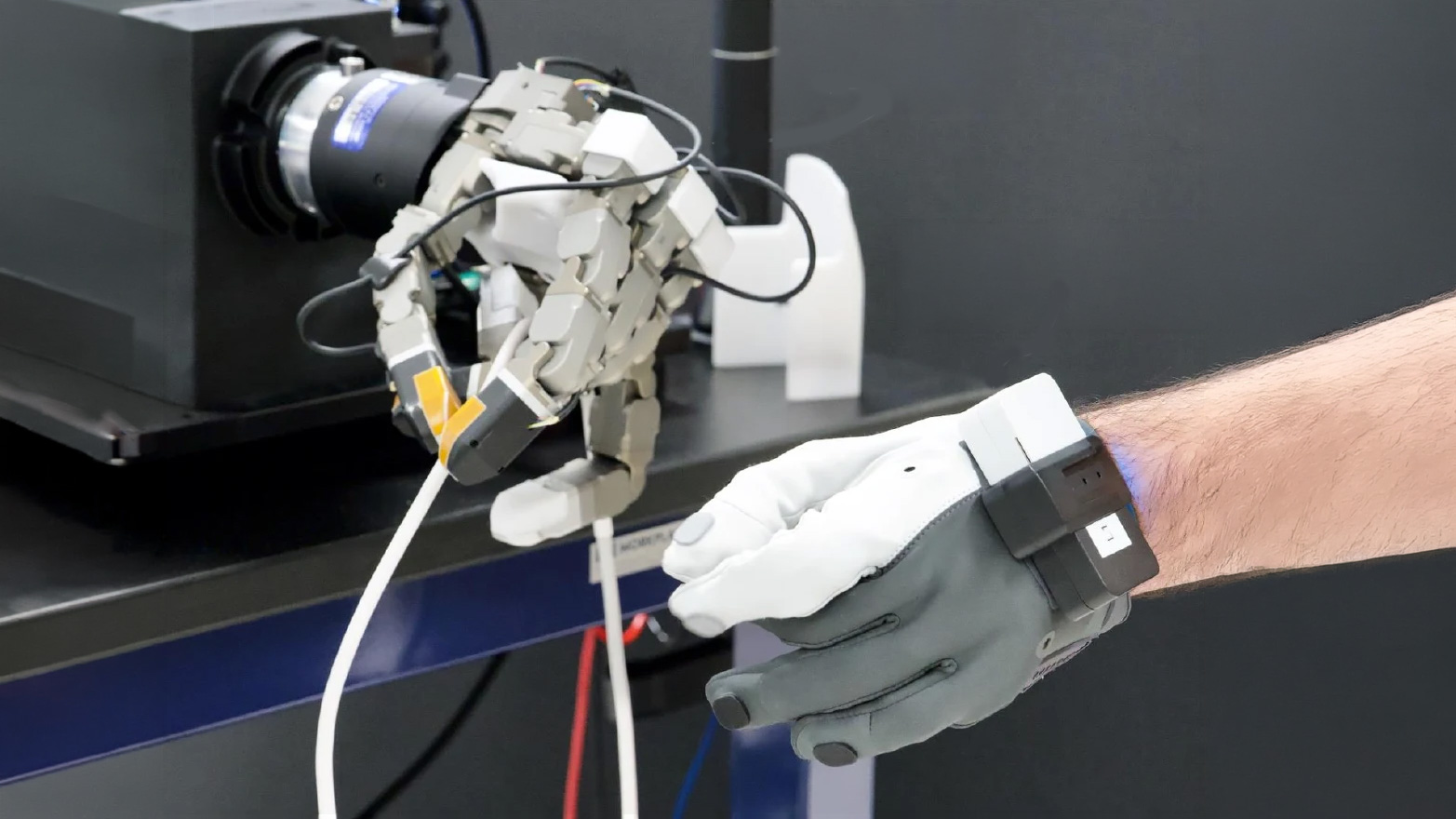
This research trains a robotic hand to feed cables through its fingers using tactile sensing and joint-state feedback, without visual input. To collect demonstrations, the researchers used MANUS Metagloves Pro to teleoperate a Tesollo DG-5F hand.
The gloves streamed the operator’s finger joint angles into a custom retargeting pipeline, which mapped human movements to eight robot joints across the thumb, index, and middle fingers. This allowed operators to demonstrate the pinch-and-curl movements needed for cable tracing.
During teleoperation, robot joint commands and measured joint states were recorded alongside tactile data from sensors on the robot’s fingertips. The recorded commands provided action targets for imitation learning, pairing the demonstrated movements with the robot’s sensory observations.
Combining task-specific training demonstrations with a separately pretrained tactile encoder, Touch2Trace learned autonomous cable tracing and demonstrated zero-shot transfer to unseen cables and routing conditions.
Touch2Trace illustrates how MANUS-based teleoperation can support dexterous robot learning: capturing human finger motion, translating it into robot actions, and collecting demonstrations alongside the robot’s own sensory feedback.