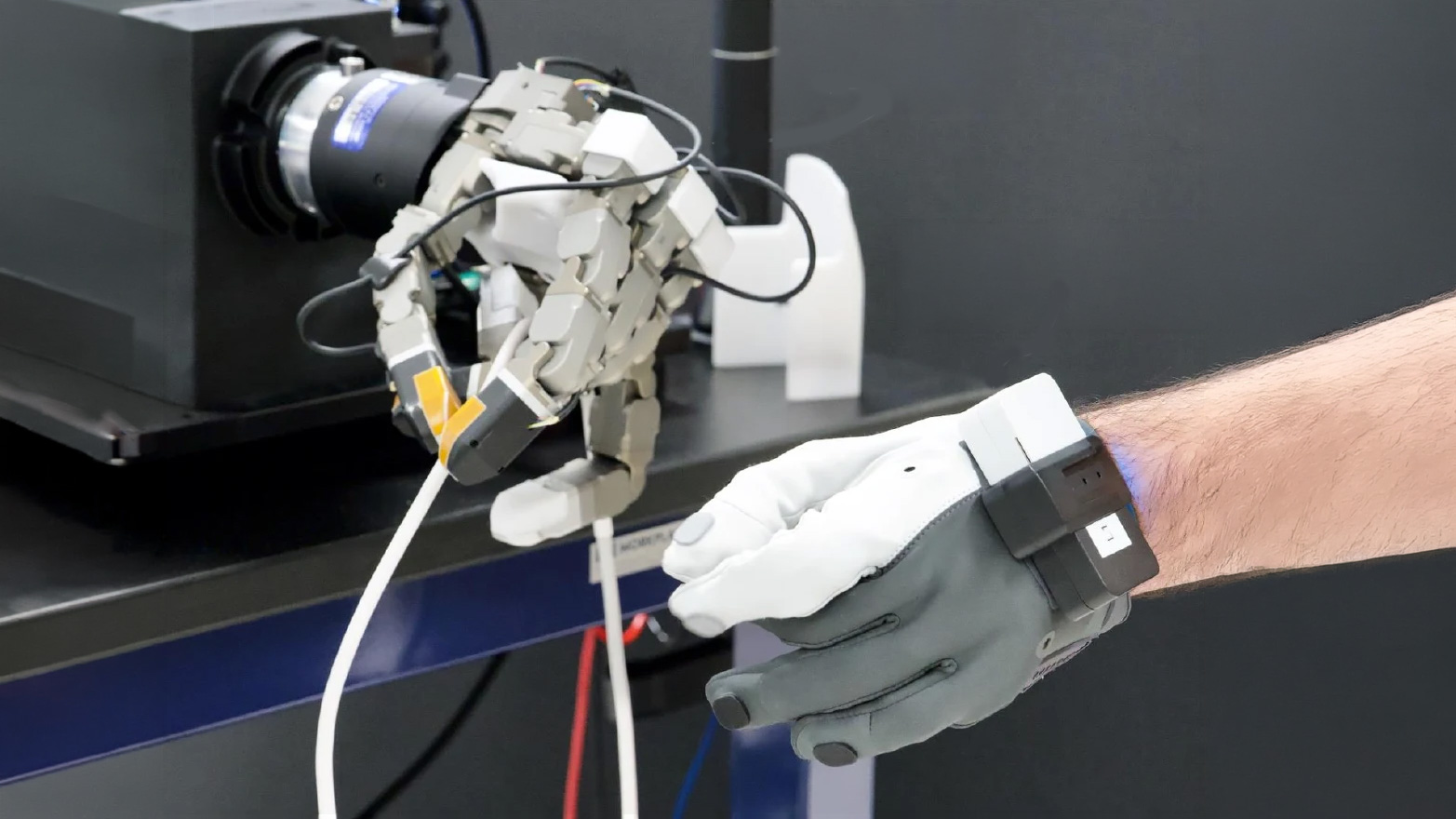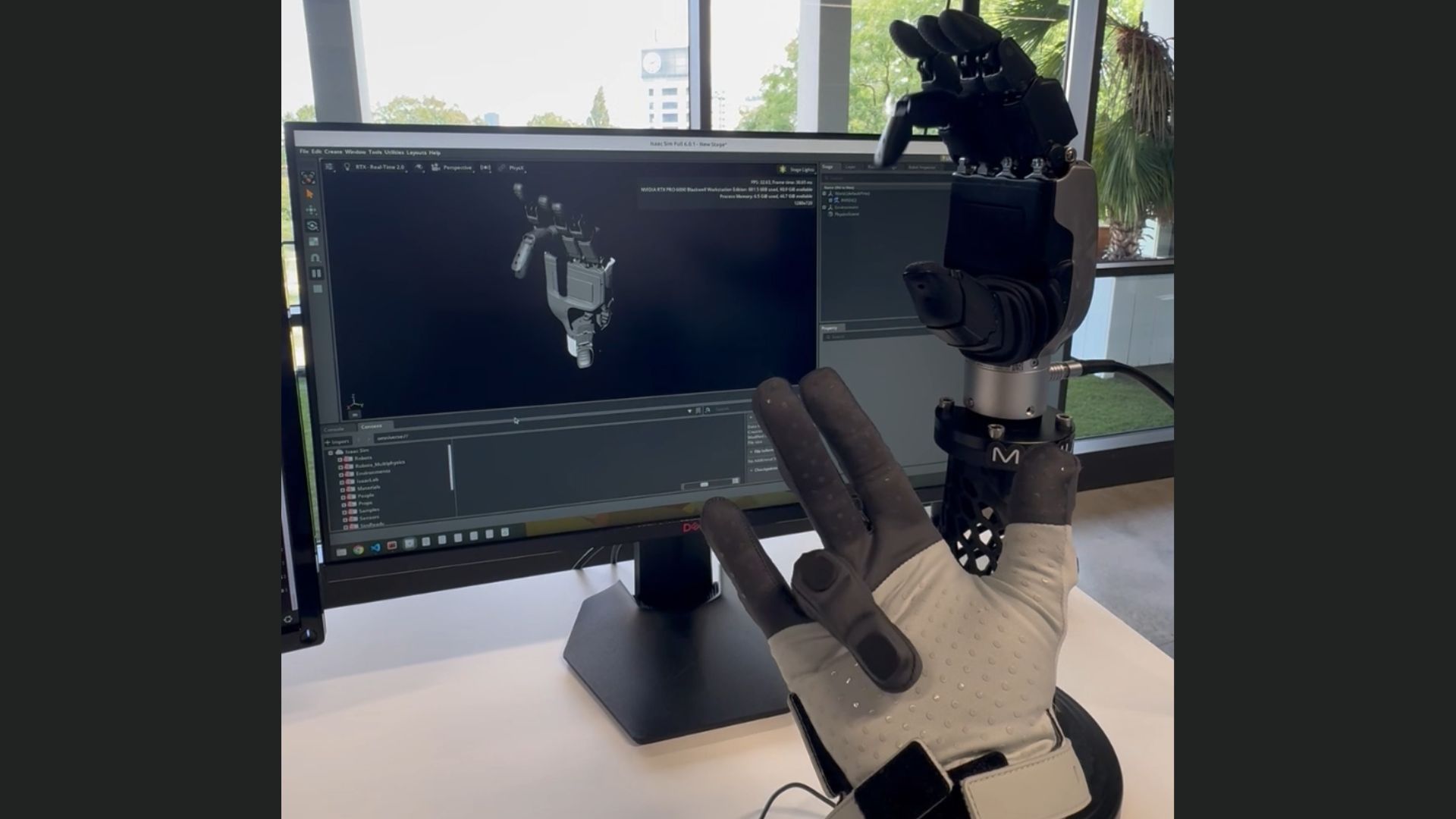


BrainCo Revo 3 is a five-finger dexterous hand developed for humanoid robots, embodied AI research, teleoperation, and manipulation. Its 21 independently actuated degrees of freedom support a wide range of finger movements and grasp configurations.
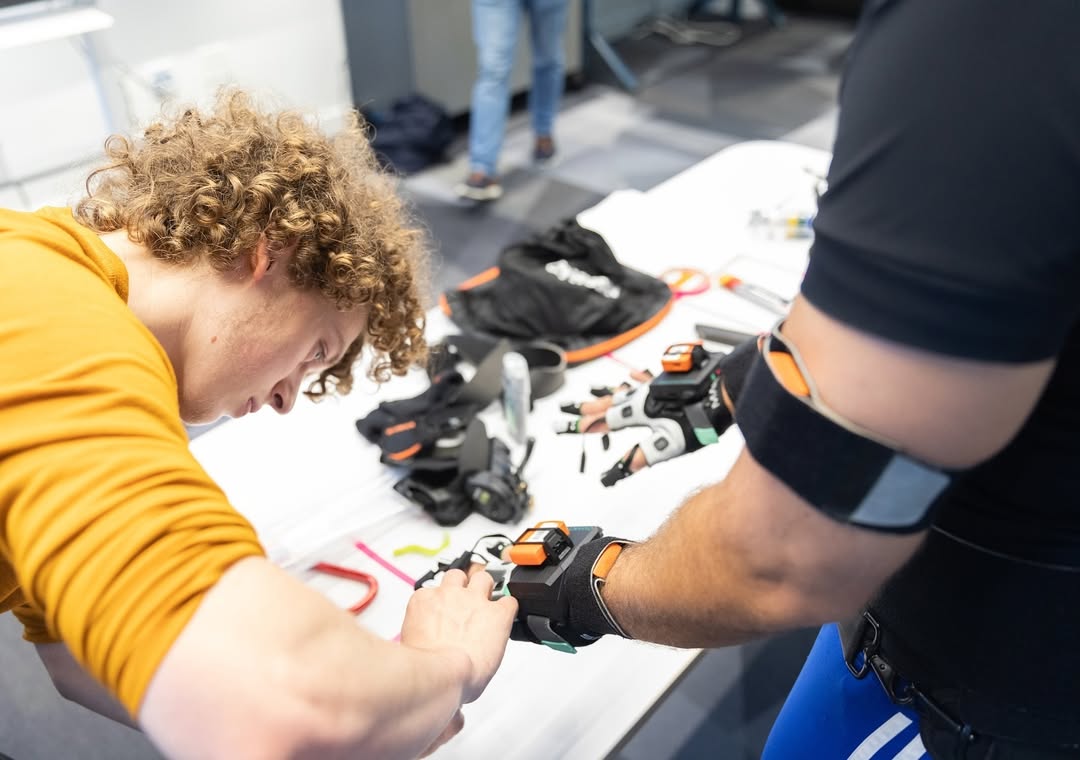
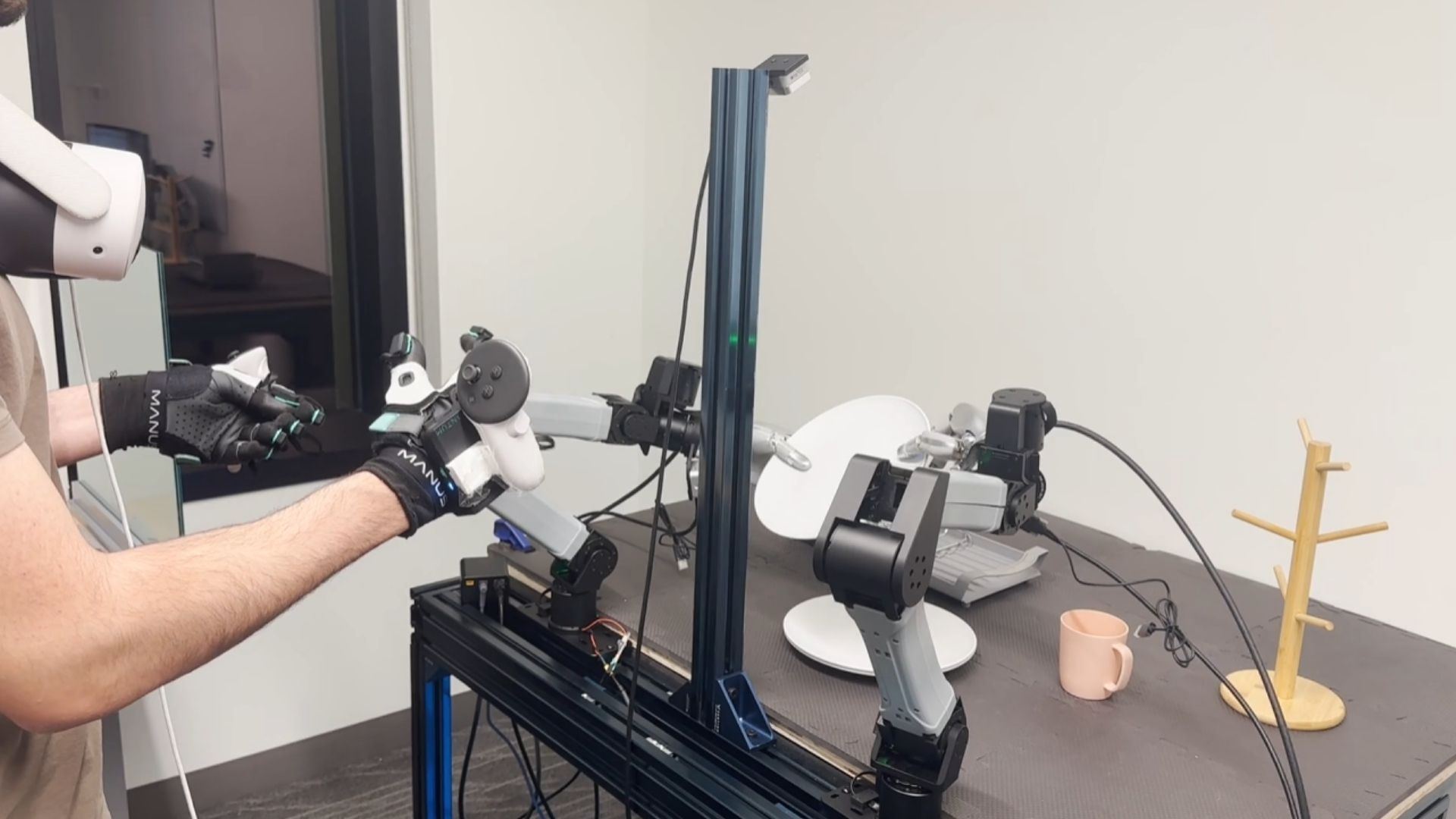
Controlling this level of articulation requires more than detecting whether the operator's hand is open or closed. A teleoperation system needs to capture the movement of individual human fingers and translate it into commands that match the kinematic structure of the robotic hand. BrainCo uses MANUS gloves to provide this human hand data for the retargeting process.
For the index, middle, ring, and little fingers, BrainCo maps the operator's movements to the corresponding Revo 3 fingers using the joint-angle data. MANUS ergonomics data represents the shape of the human hand through flexion, extension, and spread measurements, streamed in real time through MANUS Core for continuous control input.
Because the structure of these four fingers is sufficiently aligned between the human hand and the Revo 3, joint-angle data provides a direct mapping method. This retains the operator's finger articulation without requiring endpoint-based inverse kinematics for every finger.
The thumb needs a different retargeting method, since the node structure of the MANUS thumb data does not directly correspond to the Revo 3thumb. Rather than relying on joint angles alone, BrainCo uses MANUS fingertip sensor data to track the position of the operator's thumb, and this position becomes the target for the robotic thumb.
BrainCo then applies inverse kinematics to calculate the Revo 3 joint movements needed to reach that target. This preserves the operator's intended thumb placement while accounting for the structural differences between the human and robotic hand.
The BrainCo integration shows how different MANUS data representations can be assigned to different parts of the same robotic hand. Joint-angle data provides a direct mapping method for the four fingers, while fingertip data provides the flexibility needed for thumb retargeting.
When using MANUS Metagloves Pro Haptic, tactile signals from the Revo 3 can also be converted into haptic feedback on the operator's corresponding fingers, adding a feedback channel to workflows that incorporate the robot hand's tactile sensing.
By making joint angles, fingertip measurements, and hand skeleton data all available to the control pipeline, MANUS allows robotics teams to choose the representation that best matches each part of their platform. For BrainCo, this creates a practical interface between human hand motion and Revo 3 control. For manipulation researchers more broadly, it offers a reference architecture for dexterous teleoperation, robot control development, and human demonstration data collection.