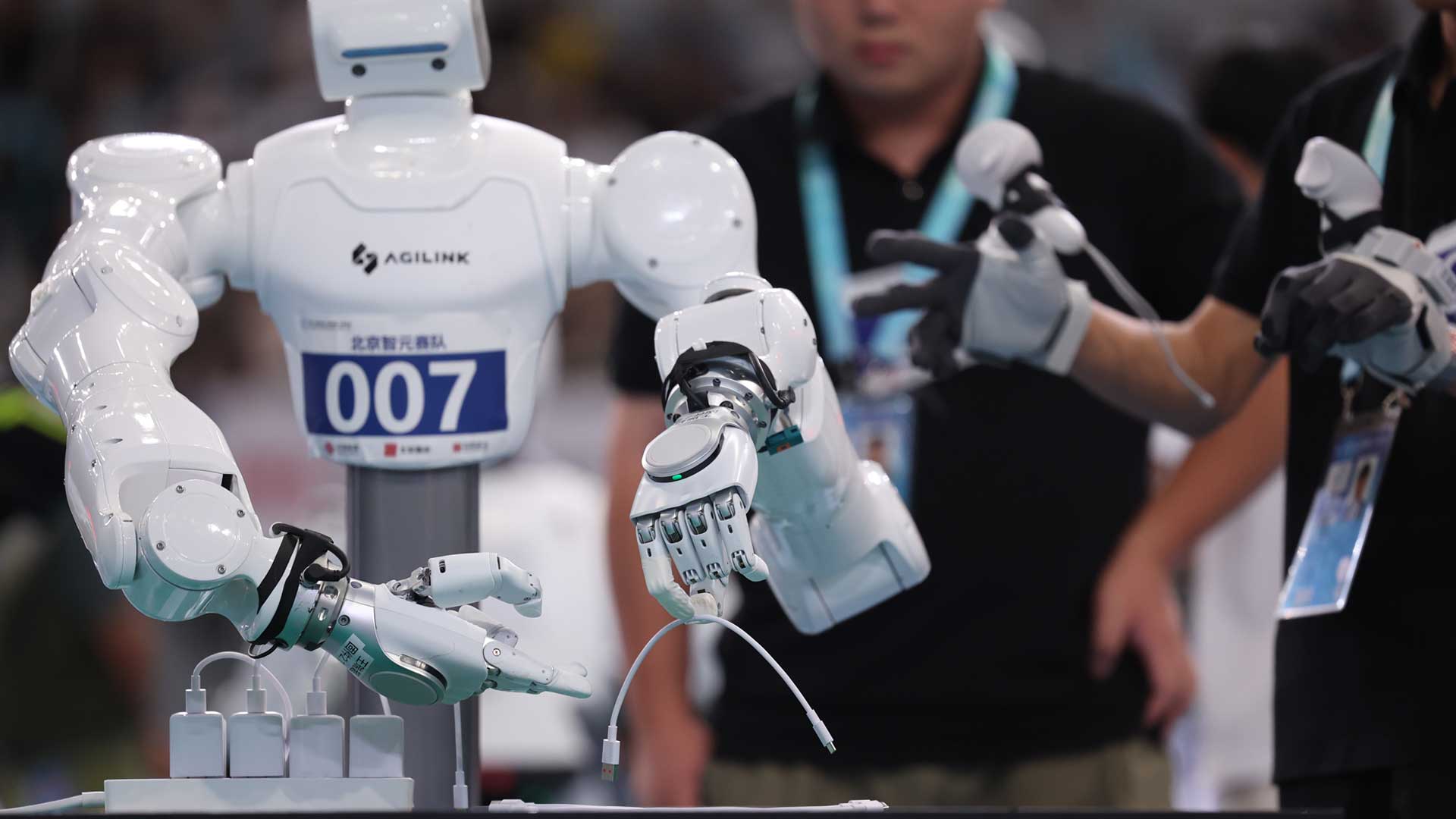

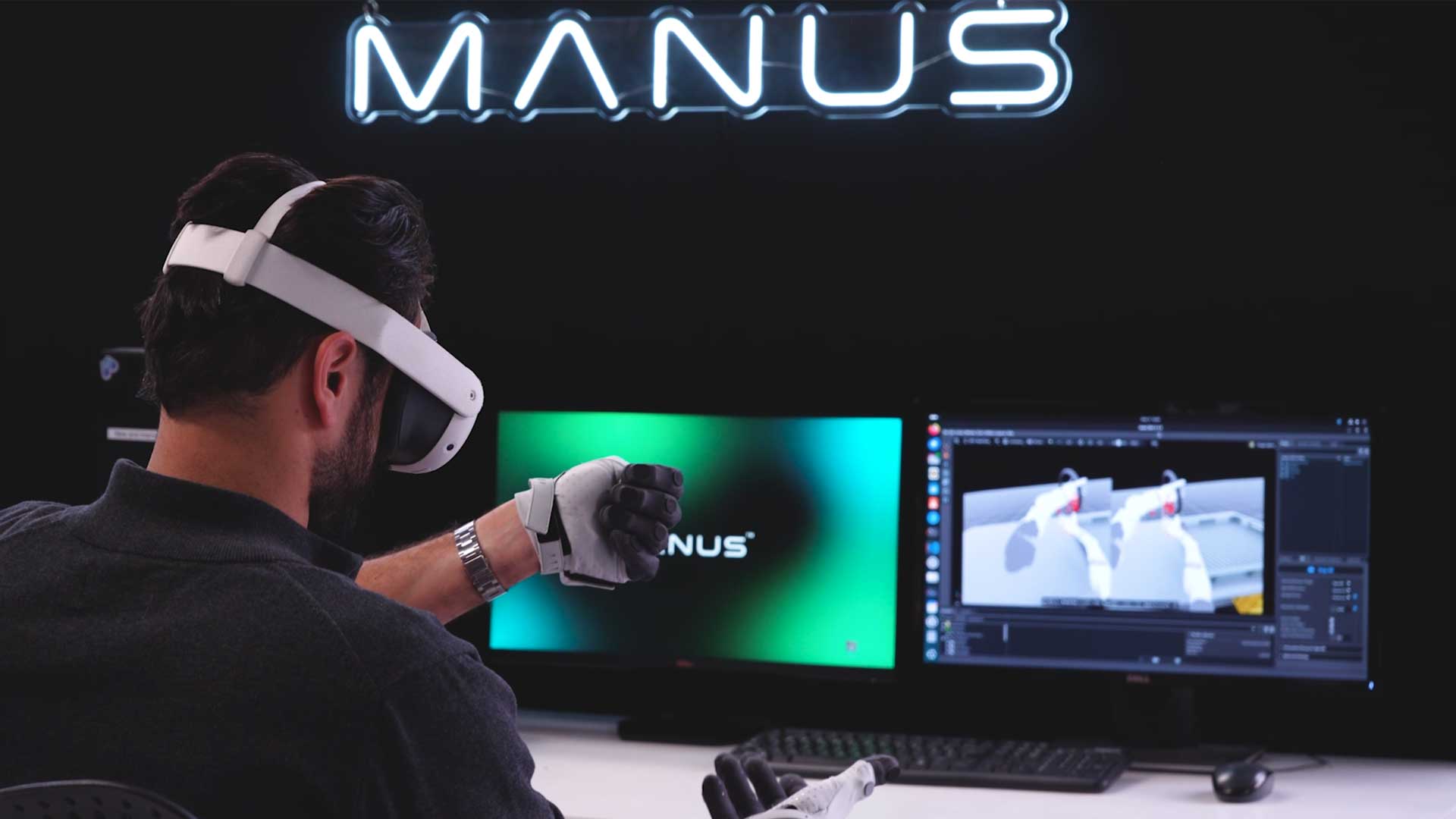
NVIDIA Isaac Teleop and Isaac Lab support per-finger haptic feedback with MANUS Metagloves Pro Haptic. This extends dexterous teleoperation with physical feedback from simulated robot interactions.
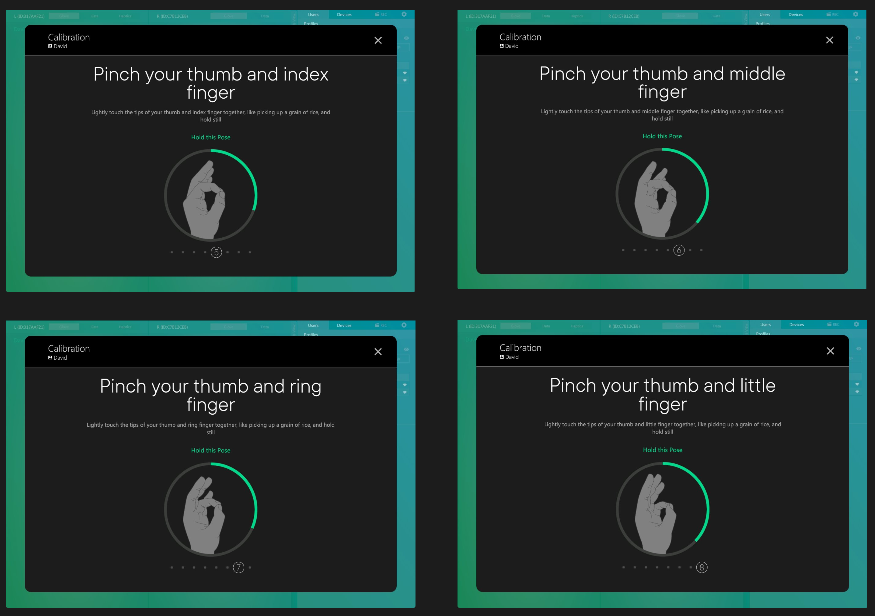
The MANUS Isaac Teleop plugin captures the hand and finger skeleton from the MANUS SDK. It injects this into Isaac Teleop's standard hand-tracking layer. Because it plugs in at this shared layer, any retargeter built for hand-tracking input can consume MANUS data without extra handling.
For pipelines needing more than the standard skeleton, the plugin can optionally expose raw flex-sensor readings as a finer-grained data stream.
Haptic output mirrors the input path in reverse. Per-finger contact forces on the simulated robot hand are measured against the grasped object. That signal passes back through the pipeline to the glove.
For MANUS Metagloves Pro Haptic, the data is ordered thumb-to-pinky. The MANUS plugin delivers it to the glove and drives the five finger actuators through the MANUS SDK. The loop closes through the same plugin on both legs.
Contact-rich tasks like tool use, in-hand reorientation, and bimanual coordination depend on grasp cues invisible to vision: grip force, slip onset, contact timing. Per-finger haptic feedback gives operators that signal directly.
Sessions recorded with haptic feedback capture more deliberate grasp adjustments and better-timed contact transitions. Fed into Isaac Lab's demonstration augmentation tools, this data trains policies on trajectories that already reflect real contact dynamics, closer to real-world conditions.